
I’ve seen brands lose 20% of their customers over a single late package. The data backs it up. One source says a single delay drives 17% churn. Here’s where most brands mess up: They treat this as a logistics problem. It’s not. It’s a retention play you’re ignoring.
Real talk: a late delivery isn’t just a shipping snafu. It’s not an angry support ticket.
It’s a customer you never see again. Nearly half of consumers stop purchasing from a brand after one bad delivery experience. That’s not a snag. That’s a bleed. It’s the silent churn that kills your LTV while you’re busy blaming your 3PL. The money you’re leaving on the table is massive. Bain & Company found a 5% increase in retention can boost profits by 25% to 95%. You spend a fortune on acquisition. Don’t let a shipping delay burn that investment to the ground.
So, what should you be doing? Because right now, your customers are waiting to hear from you. Your customers don’t just want updates. They expect them. Fast. About 60% of consumers expect personal outreach for a delay of just one or two days. Wait longer, and they think you’re incompetent. Or that you just don’t care.
The good news? You already have the tool to fix this.
Transactional emails.
Order confirmations, shipping updates. They have open rates over 80%. Your customers are already looking for them. You just need to use them right. And it’s not just email. Over a third of your customers actually prefer SMS for these updates. You need to be there.
Okay, so how do you write an email that doesn’t sound like a robot? It’s a simple formula: transparency, empathy, and a make-good. Don’t overthink it. Here’s the breakdown.
Subject Line:
Keep it clear. Not clever. Your customer is anxious. Clarity is kindness. A simple, direct subject line is best. Example:
Update on Your Order #[Order #XXXXX]
The Opener:
Apologize like a human. No corporate jargon. Get straight to the point. Example:
Hey [Customer Name], Really sorry about this, but your recent order #[Order #XXXXX] is running a bit behind schedule.
The Explanation:
Be transparent. Vague excuses create distrust. Briefly explain why there’s a delay. It shows you’re on top of it. Example:
We're currently seeing unexpected port congestion at [Port Name], which is holding up inbound shipments.
The New ETA:
Set a new, realistic expectation. This is the most important part. If you don’t have a firm date, don’t guess. Promise an update instead. Example:
We now expect it to arrive between [New Date Range].
If the ETA is unknown:
We don't have an exact arrival date yet, but we'll send a full update within 48 hours as soon as we do.
The “Make-Good”:
This is where you turn frustration into loyalty. Offer a small gesture. It’s not about the money; it’s about acknowledging their inconvenience. This is how you turn a negative experience into a loyalty driver. Example:
To make up for this, here’s a 15% off code for your next purchase: DELAY15.
Alternatively:
We've added free expedited shipping to your next order, on us.
Call to Action:
End with a direct link to their tracking page. Make it easy for them. Example:
You can follow its progress here: [Link to tracking page]
That covers email. But for urgent updates, you need something sharper.
SMS.
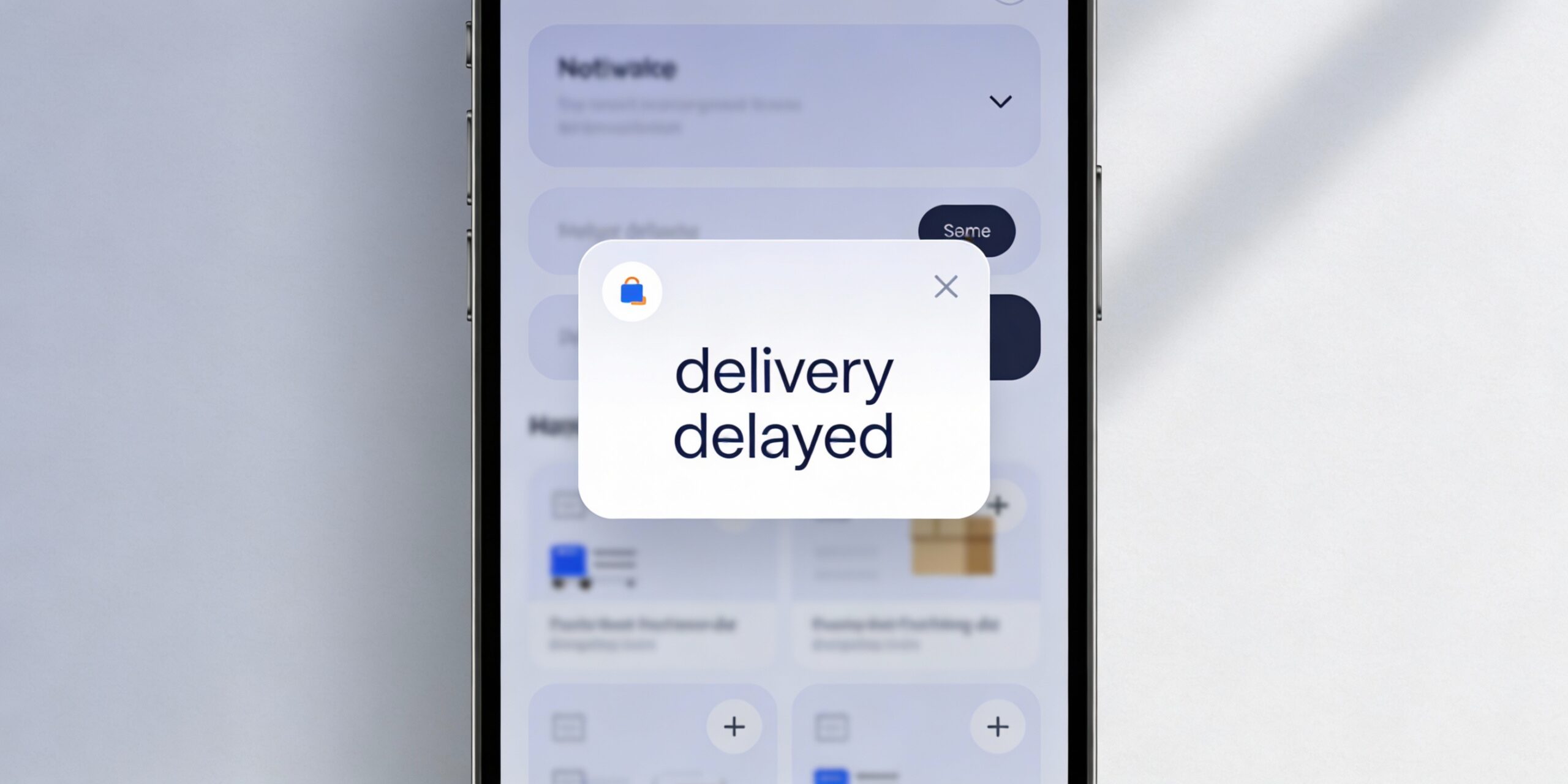
It’s direct, immediate, and perfect for quick updates. With 62% of e-commerce purchases projected to happen on mobile by 2027, you can’t ignore it.
Keep it short. No fluff. Just the facts and the make-good. Example:
Your Address Guard order #[Order #XXXXX] is delayed. New ETA: [Date Range]. Track here: [Link]. Get 15% off your next order: DELAY15.
That’s it. Two simple flows that turn churn into loyalty. Stop letting your 3PL’s problems become your problem. Take these scripts. Set up the automation. Go turn your next delay into a repeat customer.