
It’s 9 AM on a Monday. You open Zendesk and there it is, the subject line that makes your stomach drop: ‘Where is my order?!’ The customer is furious. Their package has been ‘stuck in transit’ for five days. You dig in, and you find the culprit: a typo in the street address. A single, tiny mistake. It feels like a minor logistical hiccup, an annoying but unavoidable part of the game.
But that single typo is the tip of an iceberg, one that’s costing the US economy an absurd $3.1 trillion a year. And it’s probably costing your business more than your entire marketing budget.
That one customer email isn’t an isolated incident. It’s a flare, signaling a much deeper, more dangerous problem lurking beneath the surface of your operations. It’s the kind of problem we tend to dismiss as “the cost of doing business,” but it’s actually a silent killer of customer lifetime value, a drain on your margins, and a direct threat to your brand’s reputation.
The Multi-Trillion Dollar Typo
Let’s zoom out for a second. That $3.1 trillion figure feels abstract, like a number reserved for government budgets or the market cap of Apple. How does it connect to a simple typo like “123 Main Stret” instead of “123 Main Street”?
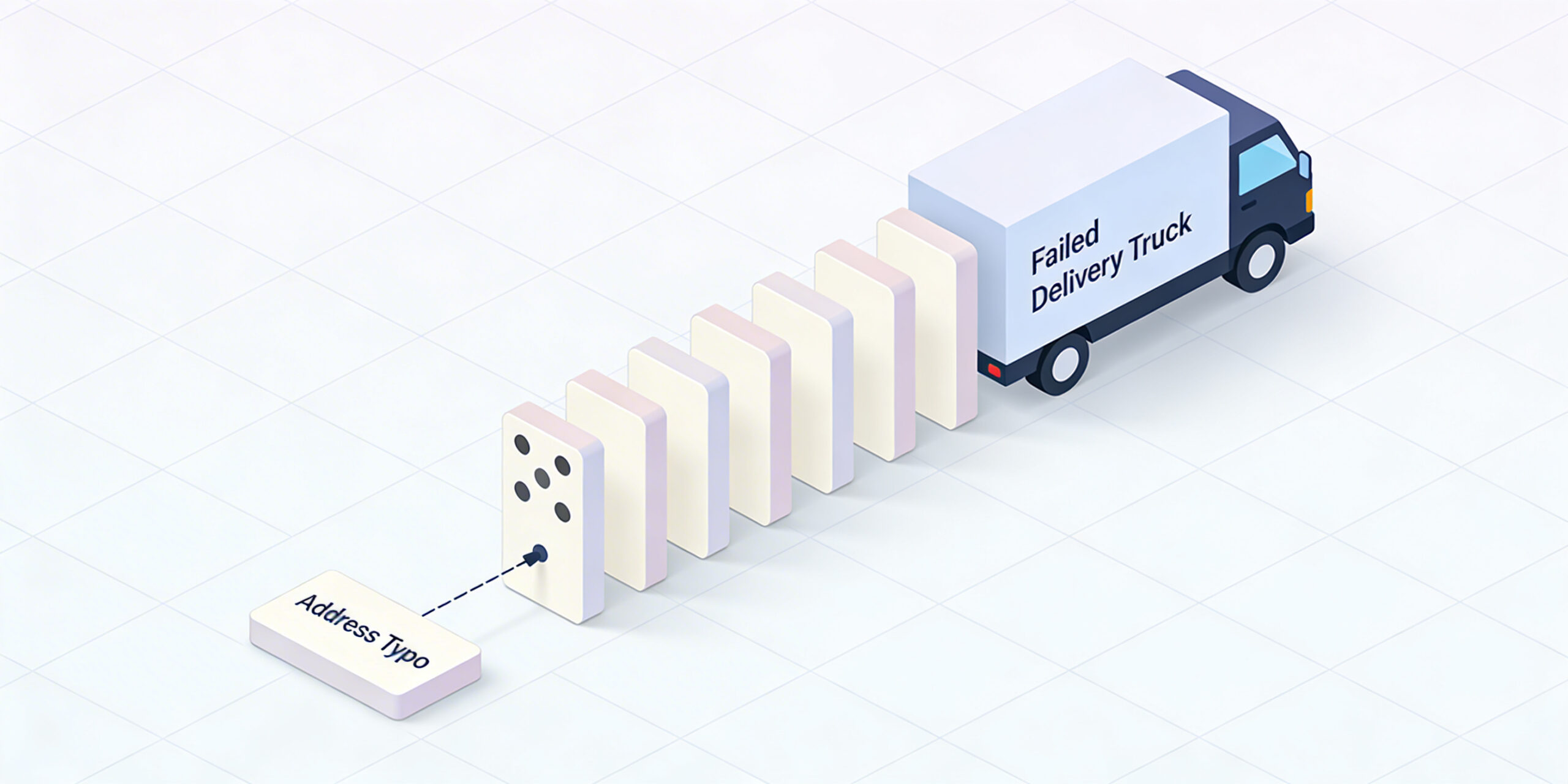
It’s the butterfly effect of bad data. Every time a piece of incorrect information enters a system, it creates a cascade of failures. A wrong address sends a truck to a non-existent location. The package gets returned to the warehouse. A customer service agent spends 15 minutes investigating. A new label is printed. A new box is packed. The truck goes out again. Each step burns fuel, time, and money. Now, multiply that by millions of packages every single day across the economy.
Suddenly, that massive number makes sense. It’s the Death Star of operational inefficiency, and it’s powered by tiny, seemingly harmless data errors.
This isn’t just happening “out there” in the broader economy; it’s happening inside your P&L. According to Gartner, poor data quality costs the average organization a staggering $12.9 million annually. Think about that. While your team is meticulously A/B testing ad creative to lower your CAC by a few percentage points, bad data is quietly siphoning off millions from your bottom line.
The connection to shipping is brutally direct. Research shows that nearly a quarter of all failed deliveries are caused by incorrect or incomplete addresses. It’s a problem that 74% of businesses identify as a major source of last-mile delivery failures. Bad data isn’t a side quest; it’s the main villain in your logistics story.
Unpacking the Financial Black Hole
So, let’s follow the money. What happens, financially, the moment a package with a bad address leaves your warehouse? It’s not one cost; it’s a Rube Goldberg machine of fees, penalties, and wasted resources.
First, the delivery fails. The package begins its sad journey back to you, a process that one case study found could take up to two weeks, leaving your inventory in limbo like a character stuck in the Upside Down.
Then the direct costs hit. The average cost of a single failed delivery ranges from $17.20 to $17.78. This covers the labor for processing the return, the cost of customer service outreach, and the expense of reshipping the item.
But wait, there’s more. The carriers have a little something for you, too: “address correction surcharges.” UPS and FedEx will happily charge you anywhere from $23.50 to $24 per package to fix that typo. It’s like running a sprint and having someone throw a $24 bill in your face every 20 feet. It’s not just the cost; it’s the sheer, infuriating inefficiency of it all.
Let’s make this concrete. Imagine your company ships 140,000 orders a year. A seemingly low 5% failure rate due to bad addresses doesn’t sound catastrophic, right? Wrong. That “minor” issue translates into 7,000 failed deliveries. At an average cost of $17.78 per failure, plus customer service time and other hidden costs, you’re looking at annual losses that can easily approach $200,000. And that’s before you even factor in those delightful carrier surcharges.
That’s not a rounding error. That’s a whole new product line you didn’t get to launch, or the engineering hire you couldn’t make. It’s a financial black hole, pulling resources away from growth, innovation, and everything that actually moves your business forward.
The Customer Loyalty Apocalypse
The financial hits are painful, but they’re just the beginning. The real, soul-crushing cost of bad shipping data isn’t measured in dollars; it’s measured in lost customers.
This is where the story turns from a business problem into a brand catastrophe. You’ve spent thousands on marketing to acquire a customer. They navigated your site, loved your product, and trusted you enough to enter their credit card information. The relationship is in its fragile, hopeful beginning. Then, because of a bad address, their package goes missing.
The result is devastatingly final. According to one report, a shocking 84% of consumers will not return to a brand after a single poor delivery experience.
Let that sink in. Not “they’ll be annoyed.” Not “they might complain.” They are gone. Forever. All that acquisition spend, all that brand-building, incinerated in an instant. It’s like a beloved character getting killed off in the first season of Game of Thrones. There’s no coming back.
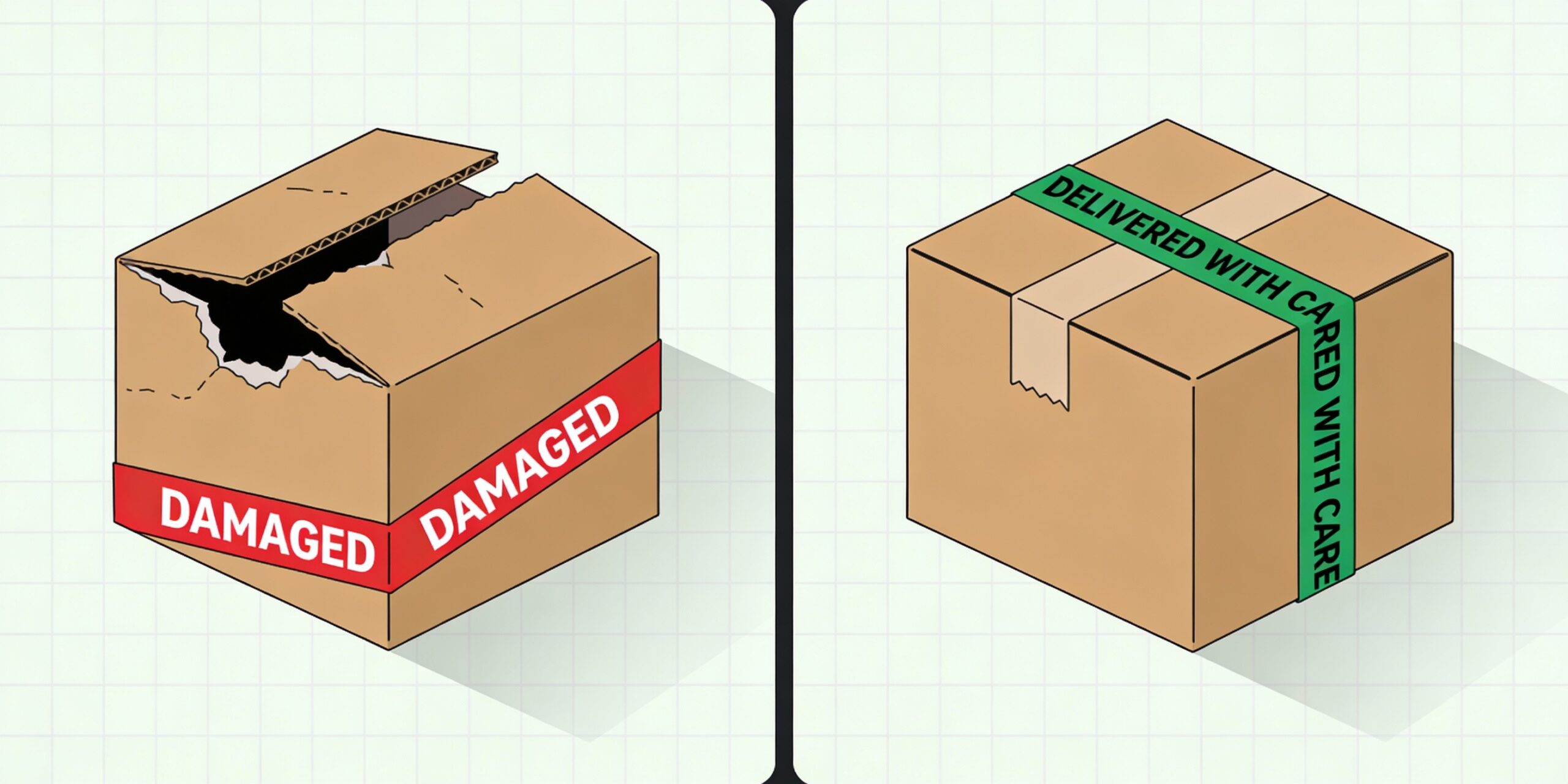
The fallout doesn’t stop there. In our hyper-connected world, one bad experience can become an unkillable zombie haunting your brand. Research shows that 40% of consumers voice their negative delivery experiences on social media. These aren’t just angry tweets shouted into the void; they are powerful, influential anti-testimonials that prospective buyers see when they’re deciding whether to trust you.
This is the loyalty apocalypse. It’s driven by the same bad data that’s draining your bank account. In fact, one study found that 48% of organizations report lost revenue and another 40% see decreased customer retention, all stemming from the consequences of bad address data.
The Address Validation Cheat Code
So, if bad data is this silent, profit-eating, customer-alienating monster, how do we fight back? What’s the counter-offensive?
The solution isn’t some complex, multi-year IT overhaul. It’s about being strategic at the single most critical moment: the point of data entry. The battle is won or lost right there in the checkout form.
The game has changed. The “last mile” of delivery, the most complex and data-sensitive part of the journey, now accounts for a massive 53% of total shipping costs, up from just 41% a few years ago. You can’t afford to get it wrong.
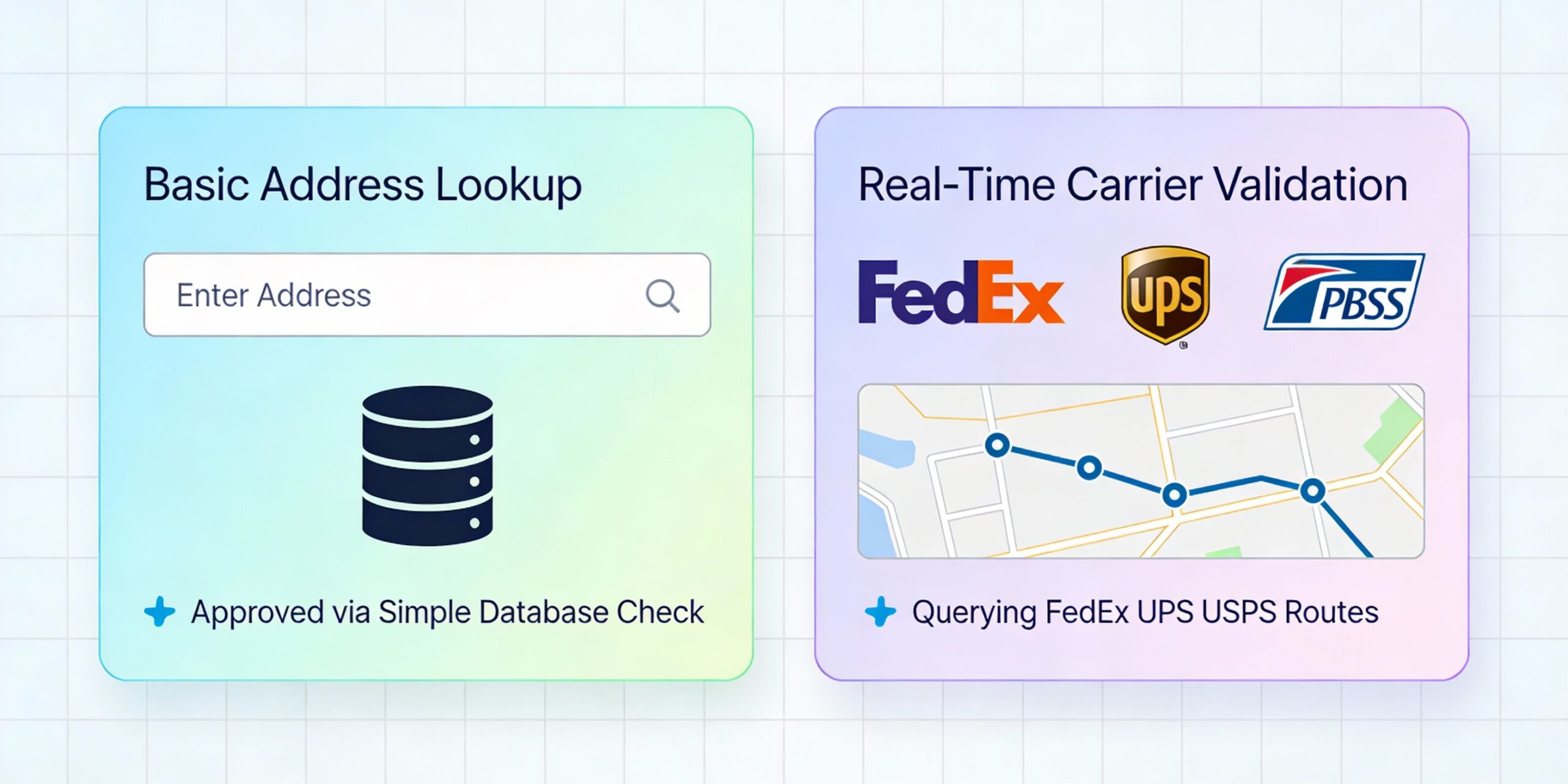
The most powerful weapon in this fight is real-time, carrier-grade address validation. Specifically, you need a system that is CASS™ certified by the USPS.
In plain English, think of it like having a super-powered postal detective—or maybe JARVIS for your checkout form—standing guard. When a customer types their address, this system instantly checks it against the official USPS database. It standardizes abbreviations (like “St” for Street), corrects typos, adds missing information like ZIP+4 codes, and confirms that the address is a real, deliverable location.
It turns a moment of potential disaster into a seamless, trust-building experience. Instead of letting a customer submit “123 Main Stret,” the system can politely suggest, “Did you mean 123 Main Street, Anytown, USA 12345-6789?” The customer clicks “confirm,” and you’ve just prevented a $17.78 failed delivery, a $24 carrier surcharge, and the permanent loss of a customer.
This is more than just data hygiene; it’s about building a smarter, more resilient customer journey. It’s a proactive defense that stops the problem before it can even start. And while the logistics industry is still in the early days of adopting advanced tech like AI—with current adoption at only 12%—implementing foundational technology like address validation positions you light-years ahead of the competition.
Playing Moneyball with Mailboxes
For too long, we’ve thought about data hygiene as a boring, back-office chore. A cost center. Something the IT team worries about.
This is the wrong frame.
Investing in front-end data integrity isn’t a cost. It’s one of the highest-ROI moves an e-commerce business can make. It’s a direct investment in revenue protection, operational efficiency, and, most importantly, customer loyalty.
Every address you validate is a WISMO ticket you prevent. Every typo you correct is a carrier surcharge you avoid. Every successful first-time delivery is a customer you keep for life.
This is frontline warfare for profitability and market share. In a world where customer experience is the ultimate differentiator, getting the package to the right place, on time, every time, is non-negotiable. It’s the promise your brand makes the moment a customer clicks “buy.”
Bad data breaks that promise. Good data keeps it.
In the never-ending quest for e-commerce greatness, data integrity is your unsung hero. It’s the Gandalf showing up just in time to turn the tide of the battle, silently winning the fights you didn’t even know you were losing. It’s time to give that hero the tools it needs to win.